
Quick verdict
| Material | Per sq ft | Lifespan | Upkeep | Best for |
|---|---|---|---|---|
| Pressure-treated | $40–60 | 15–20 yrs | High | Tight budgets, shorter stays |
| Cedar | $55–80 | 15–25 yrs | High | Real-wood look and feel |
| Composite | $65–100 | 25–30+ yrs | Low | Most families |
| PVC | $80–120 | 30+ yrs | Very low | Pools, shade, premium builds |
If you plan to stay in your home more than about ten years and don't want to stain a deck every other summer, composite is usually the best value. If budget is the priority, pressure-treated still works when it's built and maintained properly.
Pressure-treated wood
Pressure-treated (PT) lumber is chemically treated to resist rot and insects. It's the most affordable decking and the standard material for deck framing, no matter what goes on top.
- Pros: lowest upfront cost, easy to repair, strong.
- Cons: checks, cups and splinters as it dries out; needs cleaning and staining or sealing every 2–3 years.
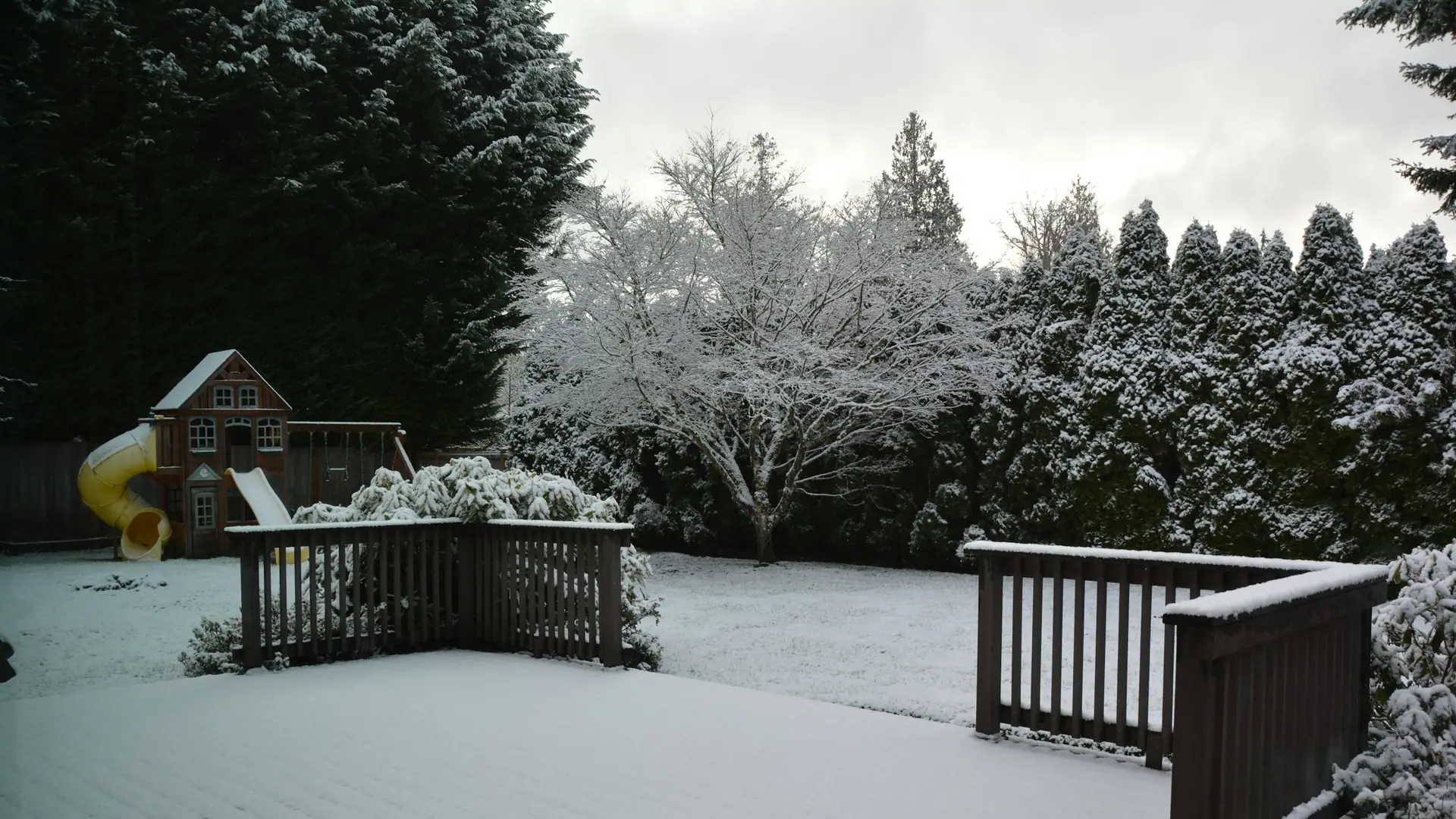
- In winter: water gets into cracks and freezes, which speeds up splitting. A good sealer slows this down.
Cedar
Cedar is naturally rot-resistant, lighter than PT and has that warm colour and smell people love. It's softer, though, so it dents and scratches more easily.
- Pros: beautiful, natural, stable (less warping than PT).
- Cons: turns silver-grey without regular staining; softer surface.
- In winter: holds up well if sealed; shovel carefully to avoid gouges.
Composite
Composite boards blend wood fibres and plastic. Modern capped composite adds a tough polymer shell that protects the core from moisture, stains and UV.
- Pros: no staining, no splinters, consistent colour, long warranties.
- Cons: higher upfront cost; dark colours get warm in direct sun.
- In winter: shrugs off snow and freeze–thaw. Use a plastic shovel; most brands allow calcium chloride ice melt.
PVC
PVC decking has no wood content at all. It's the lightest, most moisture-proof option and stays cooler underfoot than most composite.
- Pros: virtually maintenance-free, won't absorb water, cooler surface, great for pool decks.
- Cons: highest cost; expands and contracts more with temperature, so it needs careful gapping.
- In winter: excellent. Same snow care as composite.
Winter care for any deck
- Use a plastic shovel, and push along the boards rather than across them.
- Skip rock salt on wood and composite; check your board's care guide before using any ice melt.
- Clear snow away from the house wall so meltwater doesn't sit against the ledger.
- In spring, rinse off grit and check stairs and railings for anything that moved.
The 20-year cost
Upfront price is only part of the story. Here's an illustrative 300 sq ft deck over 20 years, including professional staining for wood every 2–3 years.
| Material | Build | Upkeep (20 yrs) | Total |
|---|---|---|---|
| Pressure-treated | $12,000–18,000 | $7,000–12,000 | $19,000–30,000 |
| Composite | $19,500–30,000 | Minimal | $19,500–30,000 |
| PVC | $24,000–36,000 | Minimal | $24,000–36,000 |
Over two decades, a composite deck often costs about the same as wood, without the weekends spent staining. That's why most of our clients choose it.
Want to see and feel the boards? Call or text 613-806-4000 and we'll bring swatches to your free consultation. Or start with our deck cost estimator.

The Ryan's Decks crewWritten by the team that designs and builds decks across Ottawa every season.